Summarize with AI
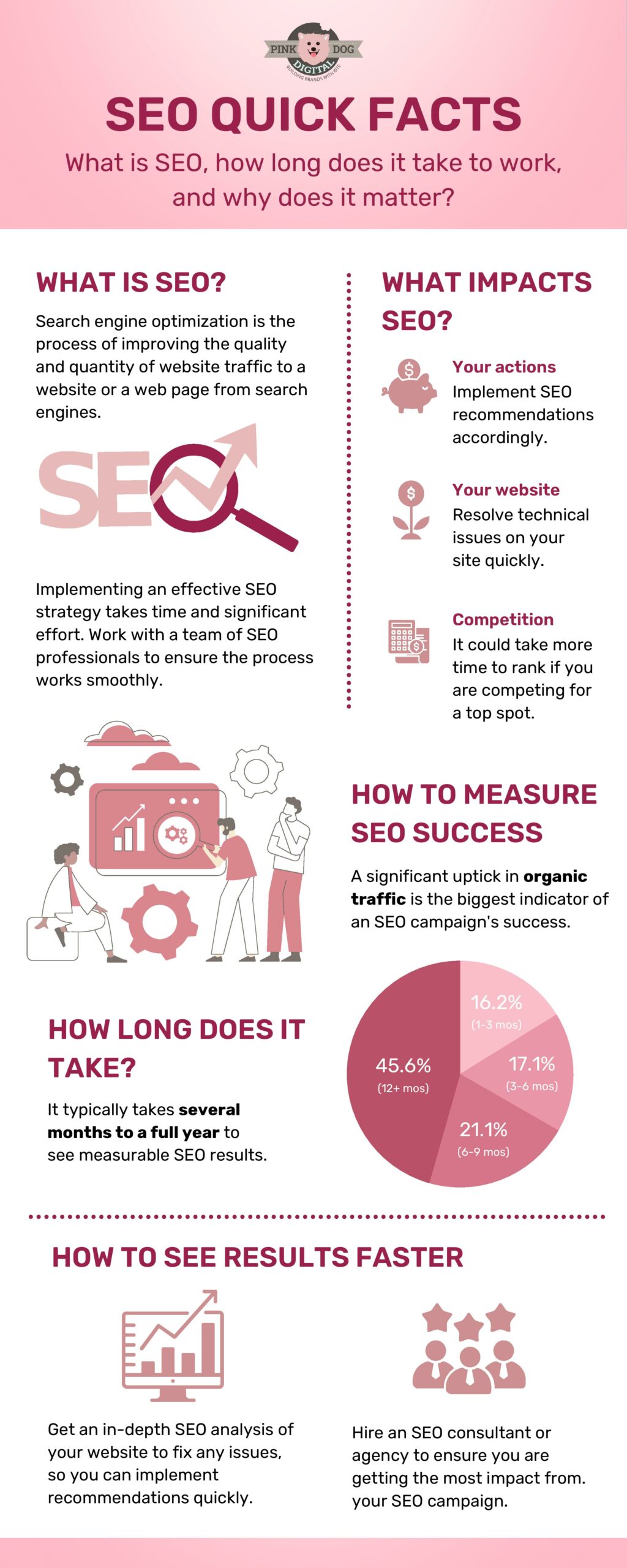
Most business owners who start investing in SEO ask the same question within the first few weeks: when will this start working? You’re putting real budget into content, technical fixes, and link building… but, for a while, the traffic numbers barely move. However, that stretch is totally normal, and knowing what’s happening behind the scenes can help make the wait much easier to manage.
This guide covers how long SEO typically takes, why it moves at the pace it does, and what you can do to keep momentum while results build.
How Long Does SEO Take to Show Results?
For most businesses, SEO takes four to 12 months to produce meaningful results. Early signals, like new keyword impressions and a few long-tail rankings, usually show up within the first three months. Steady traffic and leads tend to follow somewhere between month four and month 12. Competitive industries and brand-new websites can take longer.
That range comes from Google itself. Its guide to hiring an SEO says it typically takes four months to a year from the time you start making changes until you begin seeing the benefits.
Here’s what “results” usually look like at each stage:
- Months 1 to 3. Google crawls and indexes your changes. Impressions in Search Console start to climb, even if clicks don’t yet.
- Months 4 to 6. Pages begin ranking on pages one and two for long-tail and lower-competition keywords, and traffic starts to pick up.
- Months 6 to 12. Rankings for broader terms improve, and organic search starts producing leads you can track.
- Year two and beyond. Results compound as your content library and authority grow.
Every site moves at its own pace, so treat these as rough markers.
Why Does SEO Take So Long?
When you publish a new page or fix a technical issue, a lot has to happen on Google’s end before that work shows up in search results. Four things drive most of the wait.
1) Google Needs Time to Crawl and Index
Google doesn’t get a notification every time you update your website. Its crawlers find new and changed pages on their own schedule, and discovery alone can take days or weeks. After that, Google has to index the page, figure out what it’s about, and decide where it belongs. Ranking is a separate step that comes after all of that.
2) Rankings Are Relative to Your Competition
There’s no checklist that earns a spot on page one. To land in the top 10 for a keyword, your page has to outperform the pages already sitting there. Some of those pages have been building credibility for years with strong backlinks, clean site structure, and fast load times.
3) Authority Builds Over Time
Google tends to trust sites with a track record of consistent, relevant publishing, backlinks earned from other credible sites, and enough time online to show they’re legitimate. A new domain, or one that’s been inactive for a while, has very little of that history. You can still compete, but you’ll need to build it first.
4) SEO Results Compound
Paid ads stop sending traffic the moment you stop paying. SEO builds on itself. Each piece of content can earn backlinks, pick up internal links, and rank for long-tail keywords, and all of that strengthens the site as a whole.
It works a lot like interest in a savings account. Early deposits don’t look like much until they start building on each other. That’s why the first few months feel slow and growth tends to pick up later in the year.
What Affects Your SEO Timeline
Two businesses can start SEO on the same day and see results months apart. The biggest variables include:
- Industry competition. A plumber in a mid-sized town faces a very different field than a personal injury firm in a major metro.
- Target keywords. Broad, high-volume terms take longer than specific long-tail phrases.
- Domain age and history. Established sites usually move faster than new ones.
- How much optimization the site needs. Serious technical issues have to be fixed before content can perform.
- Existing content. A site with a solid library has more to build on.
- Backlink profile. Quality links from relevant sites speed things up. Spammy ones can slow things down.
- Execution. Consistent, well-planned work moves faster than sporadic effort.
- Budget. More resources usually mean more content, more outreach, and faster progress.
A Month-by-Month Look at SEO Milestones
Here’s roughly how the first six months of an SEO campaign unfold. The exact order shifts from site to site, but the general progression holds for most businesses.
Month 1: Research and Discovery
Every campaign starts with understanding the business and its market. That means learning who the target audience is, what sets the business apart, and how competitors approach SEO. Keyword research identifies what people are searching for, and a full technical and content audit shows what’s working on the site and what needs attention. We also benchmark current rankings so progress can be measured later.
Month 2: Website Optimization
With the audit in hand, technical fixes come first. That includes page speed, missing or weak meta descriptions, image alt text, and anything that might keep Google from crawling the site properly. We also plan content around the target keywords and review the site’s inbound links to flag any that look spammy.
Month 3: Content Restructuring and Link Building
Existing content often needs reorganizing before new content can do its job. That might mean building pillar pages around core topics or merging older articles that compete for the same keywords. Link building also kicks off this month, through outreach, partnerships, and guest posting on relevant sites.
Month 4: Content Production and Broken Link Fixes
New content goes live, with each piece built around a target keyword, written to match what searchers want, and optimized on the page. Broken links get found and fixed so visitors and crawlers don’t hit dead ends.
Month 5: Expanded Keyword Research and Guest Posting
Publishing continues, and a second round of keyword research looks for opportunities that early data has surfaced. Guest posts on industry sites keep building authority through quality backlinks.
Month 6 and Beyond: Evaluate, Refine, Repeat
Around this point, many sites start seeing measurable results, though timing varies. From here, SEO becomes an ongoing cycle of content planning, on-page optimization, and link building, with testing on key pages to improve the experience for visitors.
How SEO Timelines Vary by Business Type
The four-to-12-month range covers most businesses, but where you land in it depends a lot on your situation.
New Websites
A brand-new site starts with no ranking history, no backlinks, and no track record with Google. Expect the longer end of the range, and focus early efforts on long-tail keywords where competition is thinner.
Local Businesses
Local SEO can move faster. You’re competing with businesses in your area instead of every site in the country, and a well-maintained Google Business Profile can start generating visibility in local results relatively early.
Startups
Startups often deal with a new domain and a crowded market at the same time. Content that answers specific, niche questions tends to gain traction well before broader industry terms do.
Competitive Industries
In fields like legal, finance, and healthcare, the top results often belong to sites with years of authority and heavy SEO investment. Twelve months or more is realistic for competitive terms, and long-tail and local keywords are usually the faster wins.
Established and Enterprise Sites
Larger sites with existing authority can see changes register quickly once they’re live. The holdup is usually internal, with approvals, development queues, and multiple stakeholders slowing down implementation.
How to Speed Up SEO Results
SEO takes time no matter what, but some approaches can help you see progress sooner.
Start With Long-Tail Keywords
Long-tail keywords are longer, more specific phrases with lower search volume and less competition. They’re easier to rank for, and the people searching them usually know what they want, which can mean better conversions. Once your authority grows, you can go after more competitive terms.
Publish Useful Content Consistently
One of the worst moves during a slow stretch is to stop publishing. Build a library of well-researched, evergreen content that answers the questions your audience is asking. Useful content earns links over time, and regular publishing gives Google more reasons to keep crawling your site.
Fix Technical SEO and Site Speed
Google looks at how your site performs along with what’s on it. Check your Core Web Vitals, fix broken links, simplify navigation, and make sure the site works well on mobile. A better experience keeps visitors around longer, which sends a positive signal.
Build Internal Links and Topic Clusters
Internal links help Google understand how your pages relate to each other. Link newer posts to older ones and vice versa, and group content into topic clusters around your core services. This supports rankings and makes your site easier for visitors to move through.
Earn Quality Backlinks
Links from authoritative, relevant sites act as endorsements. Guest posting, partnerships, and outreach can all strengthen your authority. A handful of links from respected sites in your industry will do more than dozens from unrelated ones.
What to Do While Your SEO Builds
Some of the most valuable work during the early months happens outside your website.
Promote Your Content
Share new posts through your email newsletter, LinkedIn, and industry communities. Promotion brings in direct traffic and can lead to backlinks. Pay attention to which posts get shares and conversations, since those signals can guide what you write next.
Use Paid Traffic Strategically
Google Ads, LinkedIn Ads, and retargeting campaigns can bring in traffic and conversions while organic visibility builds. Paid ads won’t improve your organic rankings, but they can give you keyword and conversion data that sharpens your SEO strategy.
Track the Right Data From Day One
Set up tracking early so you have a baseline. Keep an eye on keyword rankings, traffic sources, engagement, your most-visited pages, and conversions like form fills, calls, downloads, or purchases. When SEO starts gaining traction, this data shows you what’s working and where to invest more.
Build Content From Real Sales Questions
Talk to your sales team, review support tickets, and note the questions prospects ask before they buy. Content built around those questions tends to rank for the specific searches your customers are making, and it shortens the path from search to sale.
How to Tell If Your SEO Is Working
Traffic and leads are lagging indicators. Long before they move, other signals in Google Search Console can tell you whether your SEO is on track.
- Impressions are rising. Google is showing your pages for more searches, even if clicks haven’t caught up yet.
- You’re ranking for more queries. The number of keywords your site appears for keeps growing.
- Average position is improving. Pages are moving up from page five toward pages one and two.
- More pages are indexed. New content is getting crawled and added to Google’s index.
- Branded searches are growing. More people are searching for your business by name.
If none of these are moving after six months or so, it may be time to look at what’s holding things back.
SEO Timeline FAQs
How Long Does It Take Google to Index a New Page?
Anywhere from a few days to a few weeks. You can help it along by submitting the URL through the URL Inspection tool in Google Search Console and keeping your XML sitemap up to date.
How Long Do Backlinks Take to Affect Rankings?
Usually several weeks to a few months. Google has to find the linking page, crawl it, and factor the link into how it evaluates your site. The impact also depends on the quality and relevance of the site linking to you.
How Long Should You Give an SEO Agency Before Expecting Results?
Six months is a reasonable minimum before judging results, and Google’s own guidance points to four months to a year. You should still see progress well before then through completed audits, technical fixes, new content, and early movement in impressions and rankings. A good agency will report on those signals from the start.
Can Paid Ads Speed Up SEO Results?
Not directly. Running Google Ads doesn’t influence your organic rankings. Paid ads can still bring in traffic and leads now and show you which keywords and messages convert, which helps you decide where to focus your SEO efforts.
Final Thoughts
SEO is slow because Google rewards authority, consistency, and content that’s useful to people, and all three take time to build. Most of the first few months go into groundwork. While that work settles in, keep publishing, keep improving the site, watch your early signals in Search Console, and use paid and social channels to bring in traffic as rankings build.
Build Your Long-Term SEO Strategy With Pink Dog Digital
If you’re unsure where your SEO stands or how long it should take for your business, we can help. Our team handles the research, technical work, content, and link building, and we keep you informed with clear reporting along the way. As a Google Partner agency, we build strategies around your goals, your market, and a realistic timeline.
Our services include:
- Digital advertising
- Social media management
- Content creation
- Search engine optimization
- Generative engine optimization (GEO)
- Web design
Call us at 410-696-3305, email [email protected], or contact us through our website.