
Summarize with AI
Ask most small business owners why their social media isn’t working, and they’ll blame themselves. They’re not posting enough, they’re not consistent, or they haven’t found the right hashtags yet. So they try harder; post more, follow more accounts, and experiment with different filters. And still, nothing moves.
Usually, the problem isn’t effort, but that there was never a real strategy behind that effort to begin with.
Posting More Isn’t the Answer
There’s a persistent belief that social media success is mostly a volume game. Post every day, stay active, keep showing up, and eventually the algorithm rewards you. For a small number of accounts, that’s definitely worked. But for most businesses, it hasn’t.
Plenty of small business pages post multiple times a week (even multiple times per day!) and still see flat engagement, minimal reach, and zero leads. It’s clear that that’s not a posting frequency problem., but a strategy problem. Activity may look like progress, but without a clear purpose behind it, you’re mostly just filling a content calendar.
The Real Problem Is a Lack of Purpose
Here’s the question most businesses skip when they set up a social media presence: what is this actually supposed to do for us?
If the honest answer is “we set it up because everyone said we needed one,” that’s a decent starting point, but it’s not a strategy. Without a defined goal, there’s no way to measure whether anything is working. Are you:
- Trying to drive traffic to your website?
- Build awareness in a specific local market?
- Generate direct inquiries?
Each of those goals calls for a different kind of content, a different posting cadence, and a different definition of success.
Purpose is what separates a social presence that supports your business from one that just exists.
You’re Probably Talking to the Wrong People
Even businesses that have a general sense of their goals often stumble when it comes to defining their audience. And this is where most social strategies fall apart.
When you don’t have a clear picture of who you’re trying to reach, content will usually default to generic. You end up posting things that feel safe and broadly appealing, but don’t actually resonate with anyone in particular. Engagement stays low not because the algorithm is punishing you, but because the content wasn’t built for a specific person.
The fix isn’t complicated, but it does require some thought. Who’s your best customer? What do they care about? What questions are they asking before they buy?
If you can build your content around those answers, you’ll have something worth posting.
Organic Reach Is Not What It Used to Be
Here’s something worth saying plainly, because many small businesses are operating without this context: the days of organic reach doing much of the heavy lifting are effectively over, especially on Facebook.
Back in 2012, a Facebook business page could expect its posts to reach around 16% of its followers organically. By 2018 that number had already collapsed to roughly 2%. Today, industry research puts average Facebook organic reach somewhere between 1% and 2% of a page’s total following. That means if you have 1,000 followers, a typical post might reach 10 to 20 people.
This isn’t a fluke or a temporary dip. It’s a structural reality of how Facebook’s algorithm has evolved. The platform now prioritizes personal profile content and paid ads over organic business posts. And with millions of pages competing for limited News Feed space, organic visibility for brands has become increasingly difficult to maintain.
None of this means Facebook is the wrong place to be for your business. But it does mean that organic content alone is no longer enough.
Why Paid Social Belongs in Your Strategy
A lot of small businesses treat paid social as a last resort. They see it as something you do when the organic stuff stops working. However, that framing is backwards.
Paid social, particularly on Facebook, is what bridges the gap between content that just exists and content that actually reaches the right people. Facebook’s targeting capabilities are still some of the most precise available to small businesses. You can reach people by location, demographics, interests, behaviors, and even build audiences that mirror your existing customers. For a local business trying to connect with a specific geographic community, that kind of targeting is genuinely hard to replicate anywhere else.
The most effective approach is to treat organic and paid as two parts of one strategy, not separate tactics. Your organic content builds credibility and gives people something to engage with when they land on your page. Your paid strategy makes sure the right people see it in the first place. One without the other leaves something on the table.
What a Real Social Strategy Actually Looks Like
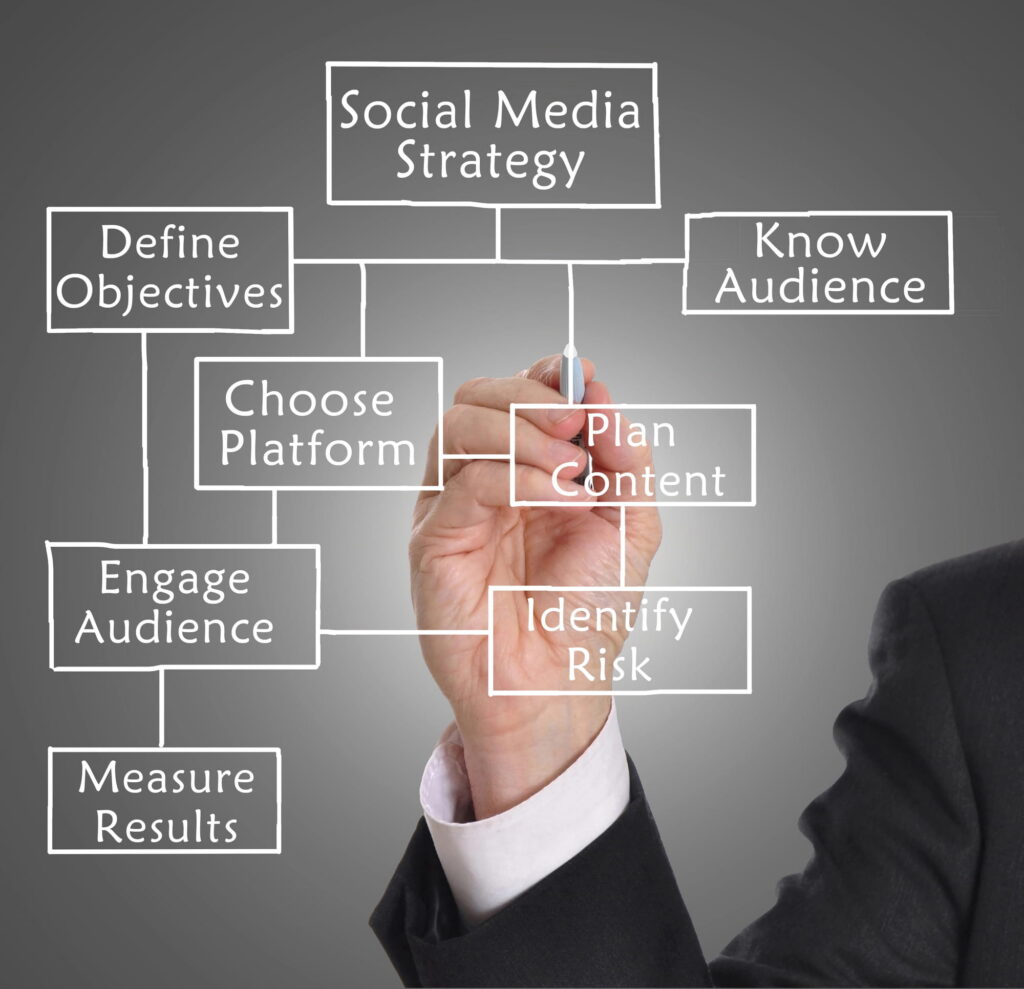
A working social media strategy doesn’t have to be complicated, but it does need a few things in place before executing.
Start with a clear goal. Know what you’re trying to accomplish and make sure it ties back to a real business outcome. Then define your audience specifically enough that your content decisions have some direction. Build content around what that audience actually cares about, not just what’s easy to produce.
From there, be honest about organic limitations. A strong, consistent organic presence still matters for credibility and community, but it shouldn’t be expected to carry the full load. Build a paid component into your plan, even a modest one, and use it to amplify what’s already working.
Finally, measure what matters. Likes and followers are easy to track, but rarely tell you much. Focus on metrics that connect to your goal: website clicks, lead form submissions, direct messages, or whatever outcome you’re actually after.
Key Takeaways
- Most social media strategies fail because of a lack of purpose, not a lack of effort.
- Without a defined goal and a specific target audience, content defaults to generic and results stay flat.
- Facebook organic reach has declined dramatically over the past decade and now averages between 1% and 2% for most business pages.
- Paid social shouldn’t be just a backup plan. For most small businesses, it ought to be a necessary part of any strategy that’s meant to produce real results.
- Organic and paid social work best together. Organic builds trust; paid builds reach.
- Measure outcomes tied to actual business goals, not vanity metrics.
Work With Pink Dog Digital to Build a Social Strategy That Actually Works
Social media can be a genuine growth channel for your business, but only when there’s a real strategy behind it. At Pink Dog Digital, we help small businesses cut through the noise, identify what’s actually worth doing, and build social approaches that connect with the right people at the right time.
Our services include:
- Digital advertising
- Social media management
- Content creation
- Search engine optimization
- Web design
Call us at 410-696-3305, email us at [email protected], or contact us through our website.