
Summarize with AI
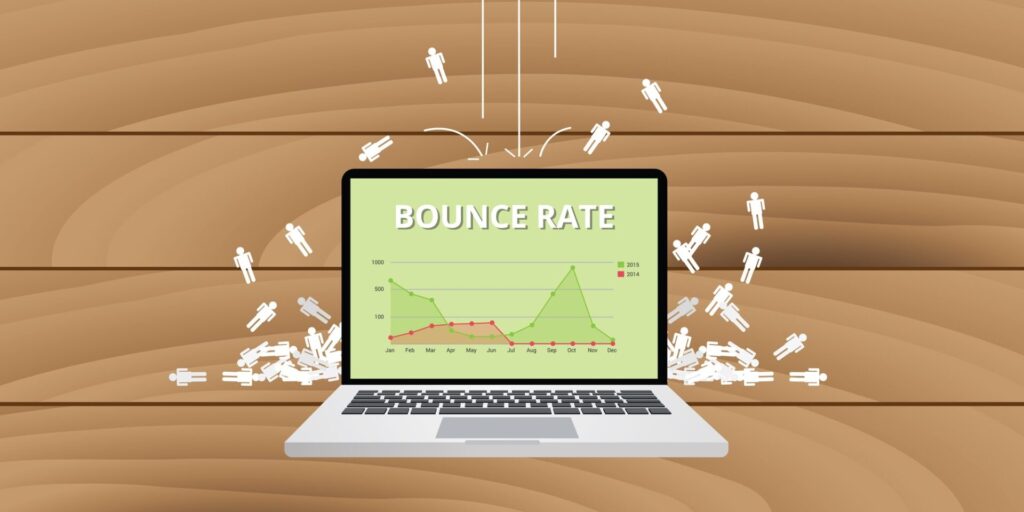
If you’ve ever checked your website analytics and seen the term bounce rate, you might have wondered if that number is something to celebrate or panic about.
The short answer? It depends on your site’s purpose, but it’s probably less dramatic than you think.
What “Bounce Rate” Really Means
Bounce rate measures how many visitors land on a page and leave without clicking anywhere else. If someone visits your homepage, reads a bit, and exits, that’s a “bounce.” The number you see in your analytics is the percentage of those single-page visits compared to all visits.
Now, the internet loves benchmarks. You’ll find plenty of articles saying “a good bounce rate is between 40% and 60%,” but that’s not a universal truth. A blog might naturally have a higher bounce rate because visitors read one article and leave satisfied.
An e-commerce store, on the other hand, might expect people to browse multiple pages before making a purchase.
So when you see a high or low bounce rate, the real question isn’t “Is this good or bad?” but “What does this mean for my goals?”
What Counts as “Good” Depends on Your Site
Here’s a quick way to think about it.
- Service-based businesses: If most visitors land on your contact page and leave, that’s not necessarily bad. Maybe they found your phone number and called.
- E-commerce sites: A bounce rate over 70% might signal a problem with page load time, product descriptions, or navigation.
- Blogs and resources: A 70%–90% bounce rate can be perfectly normal if visitors are finding answers quickly.
In other words, context matters more than the number itself.
Why a High Bounce Rate Isn’t Always Bad
It’s also worth noting that “bounce” doesn’t mean “bad experience.” Analytics tools can’t always tell when someone copies your phone number or clicks a link that opens in a new tab. That person may have technically “bounced,” even though they got what they came for.
If you’re concerned about a high bounce rate, focus on what the data says about behavior rather than failure.
- Check how long people stay on the page. A 90% bounce rate with an average session duration of three minutes isn’t a disaster.
- Review where your traffic comes from. Paid ads or irrelevant search terms might bring in people who were never looking for your services in the first place.
- Look at mobile performance. Slow load times on phones often inflate bounce rates (the speed will definitely still need to be addressed).
The Metric That Matters Most
So, does bounce rate matter? It can point you toward opportunities for improvement, but it shouldn’t drive your entire strategy. Treat it as one piece of a larger picture that includes engagement metrics like time on page, conversion rate, and scroll depth.
At Pink Dog Digital, we often remind clients that analytics are most useful when they tell a story about why people behave the way they do. A “good” bounce rate is one that reflects your site doing its job, whether that’s generating leads, selling products, or delivering helpful content.
Focus on What Your Visitors Need
If your website’s bounce rate has you scratching your head, don’t chase a magic number. Focus instead on clarity, speed, and user intent. The better your site meets real human needs, the less that single percentage point will keep you up at night.
Get Digital Marketing Services that Work from the Experts at Pink Dog Digital
Not sure how to improve your organization’s digital marketing strategy? We can help! At Pink Dog Digital, we create an online experience that turns users into followers and followers into customers. We can create a customized strategy to meet your needs.
Some of our services include:
- Digital advertising
- Social media management
- Content creation
- Search engine optimization
- Web design
Contact us at 410-696-3305 or email us at [email protected] for any inquiries or to book a service. You can also fill out our online Contact Us form or visit our website to learn more about us.